
Navigating the AI Frontier: 5 Trends Transforming UX Research
The landscape of User Experience Research (UXR) is undergoing a profound transformation, driven by the relentless march of artificial intelligence. As we stand at the crossroads of human insight and machine learning, UX researchers find themselves navigating a terrain rich with both opportunity and challenge. AI is not just a tool in the UXR toolkit; it's rapidly becoming a collaborative partner, reshaping how we understand users, analyze data, and derive meaningful insights. This shift promises to amplify our capabilities, but it also raises important questions about the future role of human researchers.
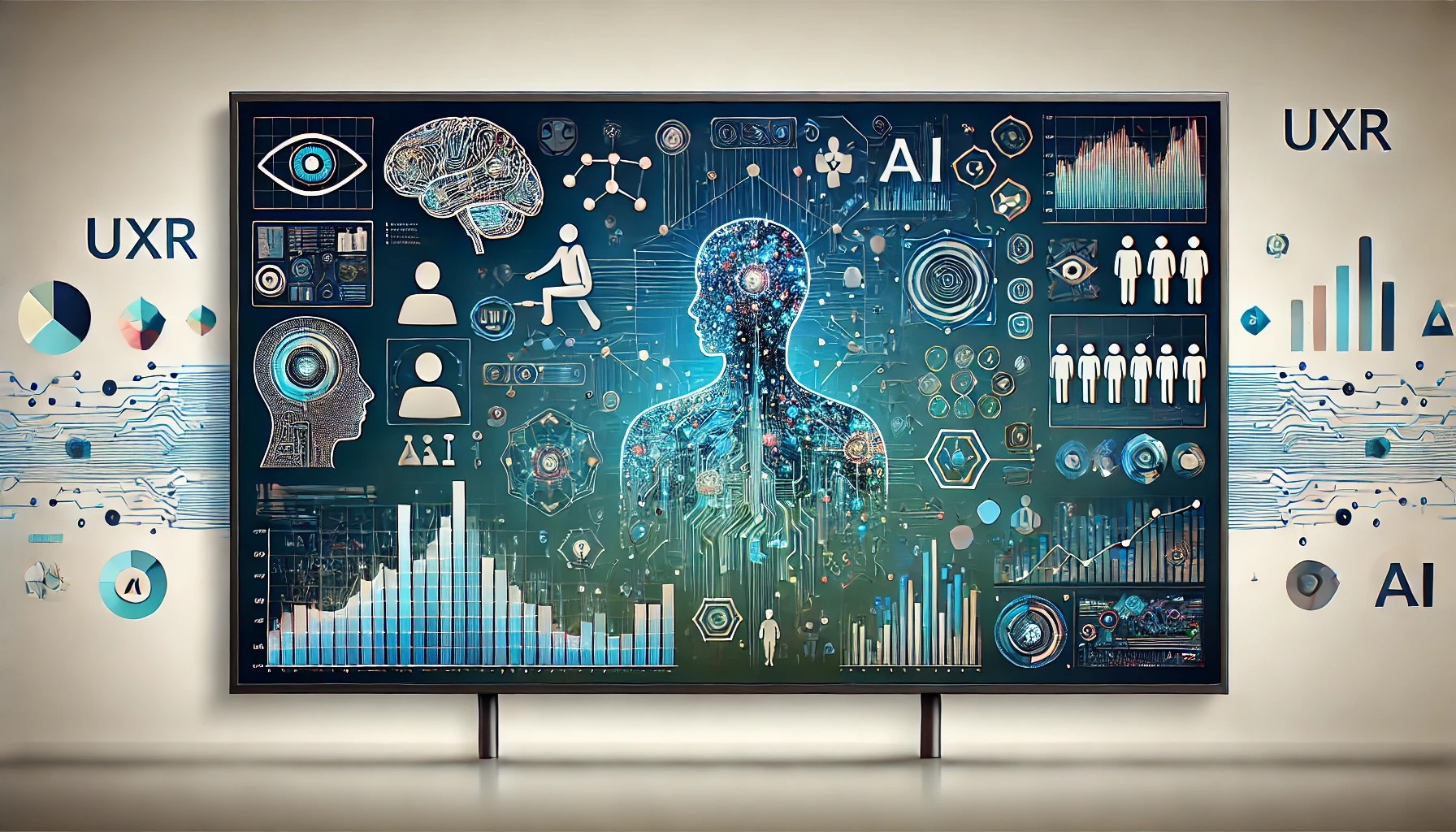
As we peer into the horizon of UXR, five key trends emerge, each a testament to the growing influence of AI in our field. These trends offer a glimpse into a future where the boundaries between human intuition and machine intelligence blur, creating a new paradigm for understanding and designing user experiences.
1. AI-Assisted Data Analysis
AI tools are revolutionizing the way researchers analyze large datasets, offering faster and more comprehensive insights. Machine learning algorithms can quickly identify patterns and trends that might take human researchers much longer to discover.
Early indicator: UX teams reporting significant time savings in data analysis tasks, with some noting up to 50% reduction in analysis time.
Potential drawback: Over-reliance on AI analysis may lead to overlooking nuanced human insights.
2. AI-Moderated Research Studies
AI-powered chatbots and virtual assistants are increasingly being used to conduct user interviews and surveys, allowing for 24/7 data collection and reducing the need for human moderators.
Early indicator: Companies reporting increased participant engagement and higher completion rates for AI-moderated studies.
Potential drawback: Loss of human empathy and ability to ask spontaneous follow-up questions during interviews.
3. Automated Research Planning
AI tools are being developed to help researchers generate study plans, participant screeners, and even interview questions based on project objectives.
Early indicator: Researchers reporting faster study setup times and more consistent research methodologies across projects.
Potential drawback: Risk of cookie-cutter research designs that lack creativity or fail to address unique project needs.
4. Enhanced Biometric Analysis
AI is improving the analysis of biometric data such as eye-tracking, facial expressions, and physiological responses, providing deeper insights into user emotions and behaviors.
Early indicator: Increased adoption of biometric tools in UX labs and remote testing environments.
Potential drawback: Privacy concerns and potential for misinterpretation of physiological data.
5. AI-Generated Personas and User Segments
Machine learning algorithms are being used to create more dynamic and data-driven user personas, moving beyond traditional static profiles.
Early indicator: Product teams reporting more accurate user targeting and improved product-market fit based on AI-generated personas.
Potential drawback: Risk of reinforcing biases present in training data and oversimplifying complex user behaviors.
While these trends offer exciting possibilities for UX research, it's crucial to maintain a balance between AI-driven efficiency and human-centered insights. As AI tools evolve, researchers must adapt their skills to effectively leverage these technologies while preserving the core principles of user-centered design.
Sources:
Nielsen Norman Group: "The Future of UX Research" (2023)
UX Booth: "AI in UX Research: Trends and Implications" (2024)
Forrester Research: "The Impact of AI on User Experience Research" (2023)
Journal of Usability Studies: "Artificial Intelligence in UX Research: A Systematic Review" (2024)
ACM CHI Conference Proceedings: "AI-Assisted UX Research: Opportunities and Challenges" (2023)
Thanks for viewing.
Hope you enjoyed it!