
Mastering the UX Research Process :
A Comprehensive and Empathetic Approach
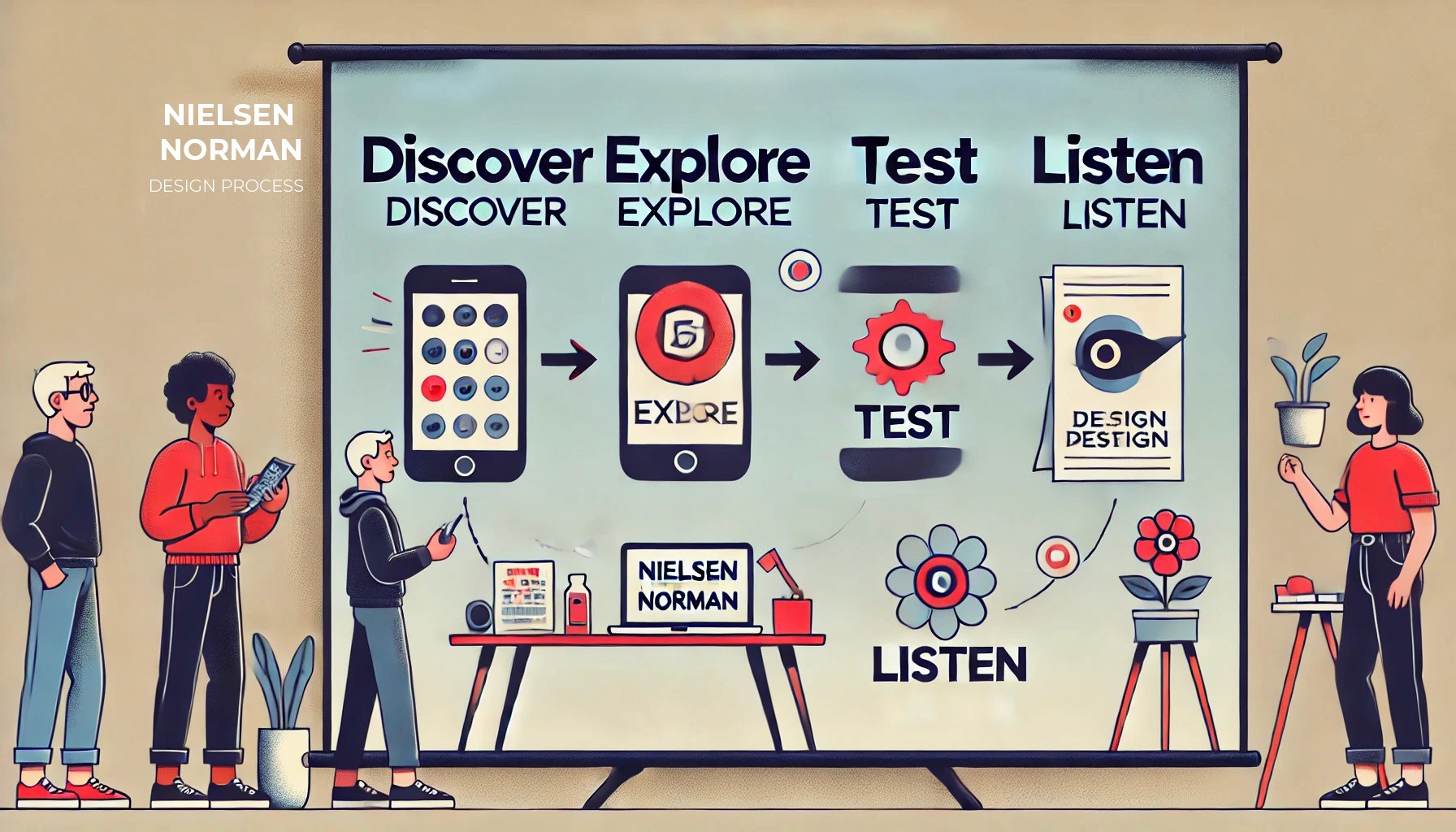
In the realm of UX research, I have drawn significant inspiration from the methodologies advocated by Nielsen Norman Group (NNG). Their approach to user research is systematic, thorough, and data-driven, making it a robust foundation for any UX research endeavor. However, to tailor it more to my style and the unique challenges of my projects, I have added layers of empathy and rapid strategy testing to ensure that the solutions proposed are not only effective but also resonate deeply with users.
The Process
1. Discover: At the discovery phase, I prioritize understanding the users and their needs deeply. This involves gathering as much contextual information as possible to illuminate what we don’t know and validate assumptions before moving forward. Here are a few commonly used methods by me in this stage:
• Field Studies & User Interviews: I conduct in-depth field studies and user interviews to observe users in their natural environment. This helps uncover insights that might not be evident in a controlled setting.
• Stakeholder Interviews: Engaging with stakeholders helps gather business requirements and constraints, ensuring that the solutions align with organizational goals.
• Competitive Analysis: Analyzing competitor products to identify strengths and weaknesses, which provides a benchmark for our product.
2. Explore: During the exploration phase, I dive into understanding the problem space and defining the design scope. This phase is crucial for identifying user needs and translating them into actionable design strategies. Here are a few commonly used methods by me in this stage:
• Journey Mapping & Task Analysis: Mapping user journeys and analyzing tasks help identify pain points and opportunities for improvement.
• Persona Building: Creating detailed personas based on user research ensures that the designs are user-centered.
• Prototype Testing: Early-stage prototype testing with users provides immediate feedback and helps refine the design iteratively.
3. Test: Testing is an ongoing phase where I validate the designs and proposed strategies to ensure they meet user needs effectively. Here are a few commonly used methods by me in this stage:
• Usability Testing: Conducting qualitative usability testing frequently helps identify usability issues early and allows for quick iterations.
• Benchmark Testing: Measuring key metrics such as task completion time and error rates provides quantitative data to gauge improvements.
• Accessibility Evaluation: Ensuring the design is accessible to all users, including those with disabilities, is a critical part of the testing phase.
4. Listen: Listening is a continuous activity throughout the research process, helping to uncover new insights and monitor existing issues. Here are a few commonly used methods by me in this stage:
• Surveys & Analytics: Gathering quantitative data through surveys and analytics helps identify patterns and trends.
• Social Media & User Forums: Monitoring social media and user forums provides insights into user sentiments and common issues.
• Feedback Mechanisms: Implementing easy-to-use feedback channels ensures ongoing user input and helps identify areas for improvement.
5. Implement & Iterate: Implementing feedback and conducting rapid testing are crucial to refining the product and ensuring it meets user needs effectively. Here are a few commonly used methods by me in this stage:
• Rapid Prototyping: Quickly developing prototypes based on user feedback to test new ideas and solutions.
• Iterative Testing: Continuously testing and refining the product based on user feedback to ensure it evolves to meet user needs.
• Deployment & Monitoring: Implementing the final solution and monitoring its performance to gather ongoing feedback and make necessary adjustments.
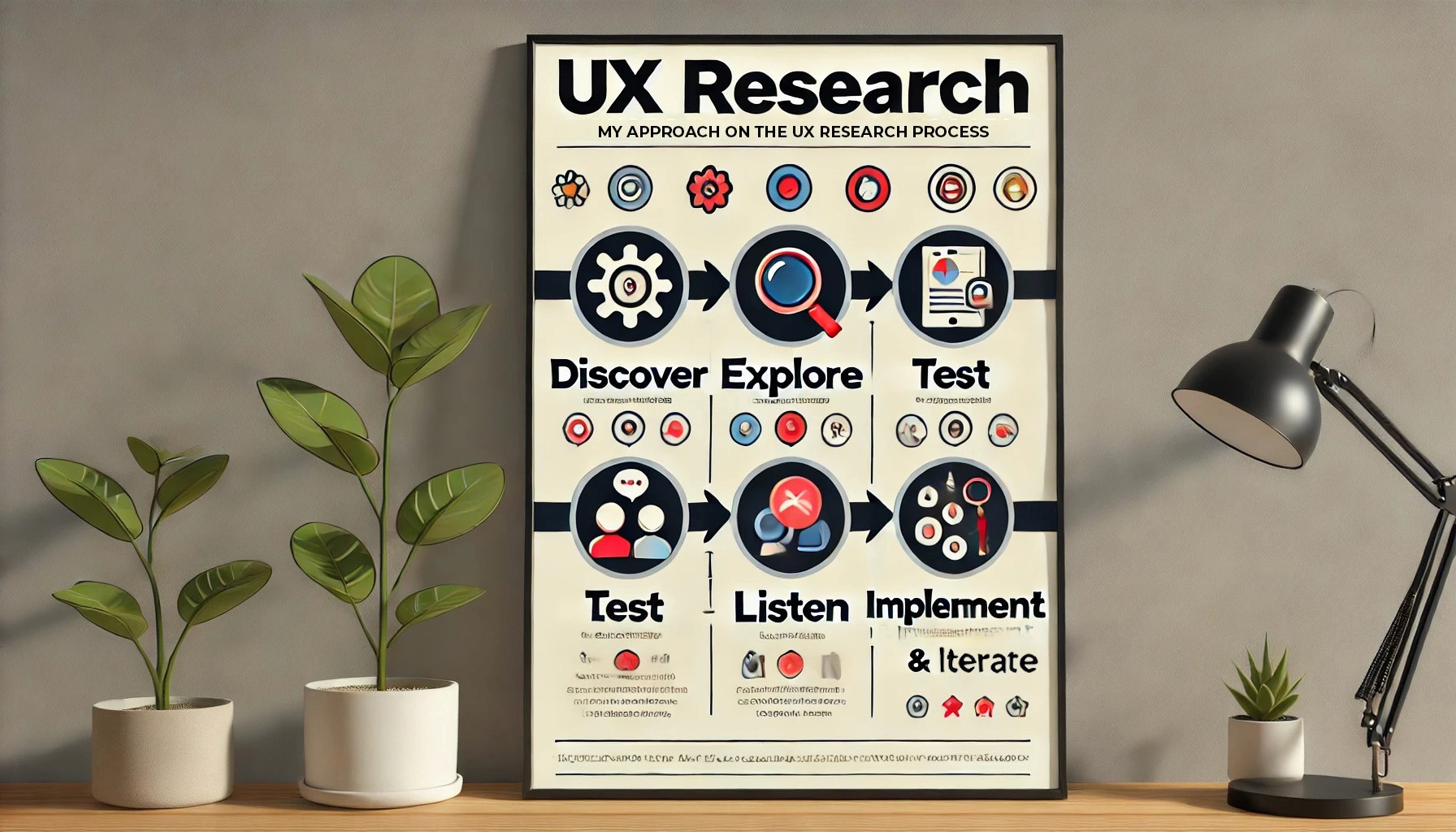
By blending the structured methodologies of Nielsen Norman Group with a strong emphasis on empathy and rapid validation, my UX research process ensures that the designs are user-centered, effective, and emotionally resonant. This approach not only addresses usability issues but also creates meaningful experiences that truly meet user needs.
Thanks for viewing.
Hope you enjoyed it!