
Empathy by Design:
Forging Connections Through UX
In the intricate world of design, the user's experience reigns supreme, guiding every decision and iteration. User Experience (UX) design emerges as the beacon illuminating our path, blending empathy, simplicity, and reflexivity to craft immersive interactions. Join us as we delve into the transformative realm of UX design, where innovation meets human connection to create experiences that resonate deeply with every user.
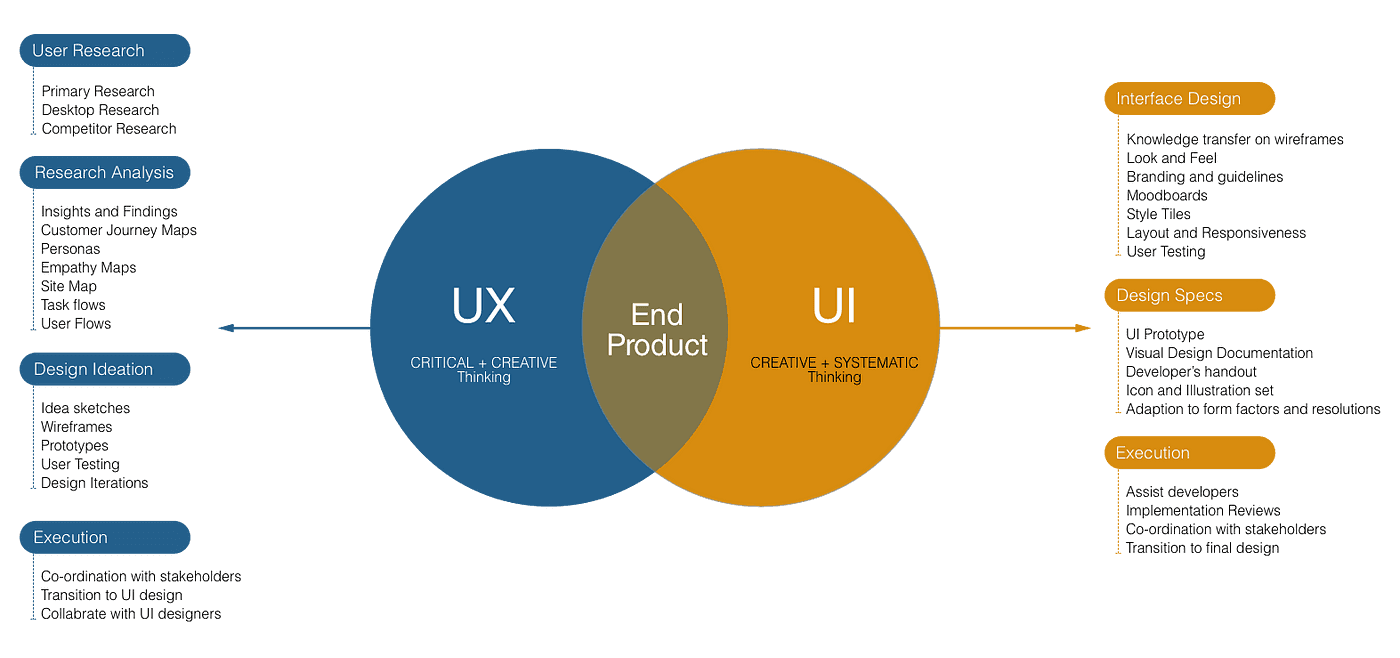
In the intricate tapestry of design, the user is not merely a passive recipient but an active participant, shaping and enriching the creative journey. Whether conceptualizing digital interfaces or sculpting physical spaces, the pivotal starting point remains the same: understanding the user. This fundamental ethos underscores the essence of user-centric design, wherein the primary objective is to optimize the user's experience. Such optimization not only renders the product more relevant and resonant but also engenders user advocacy—a formidable force in today's dynamic landscape.
While discussions on user experience often orbit the digital realm, its essence permeates across all design domains. From the tactile allure of a well-crafted artifact to the harmonious flow within architectural landscapes, the principles of user experience imbue every facet of design. Furthermore, an effective user experience extends beyond mere functionality; it fosters seamless and intuitive communication, enriching the interaction between user and design.
At the core of crafting exceptional user experiences lie four indispensable skills:
Empathetic Thinking: Empathy serves as the bedrock of user-centric design, forging a profound connection between creator and user. By immersing themselves in the user's perspective, designers can cultivate a deeper understanding of their needs, desires, and pain points. Empathetic thinking enhances relatability and adoption rates, paving the way for impactful design solutions.
Simplicity and Conciseness: The mantra of "less is more" resonates deeply in the realm of user experience. Streamlining design elements and interactions not only fosters swift and intuitive usage but also amplifies the clarity of communication. By distilling complexity into elegant simplicity, designers empower users to navigate seamlessly, enhancing the overall experience.
Reflexivity: Reflexivity, the ability to reflect critically on one's own assumptions and biases, is essential for fostering inclusive and empathetic design practices. By interrogating preconceptions and challenging conventional wisdom, designers can uncover new insights and perspectives. Reflexivity fosters self-awareness and humility, enabling designers to create solutions that resonate authentically with diverse audiences.
Iterative Design Process: Embracing an iterative approach allows designers to refine and optimize user experiences continuously. By soliciting feedback, testing prototypes, and iterating based on user insights, designers can fine-tune their creations to align more closely with user expectations. This iterative loop fosters evolution and innovation, ensuring that the user remains at the forefront of the design process.
In essence, the pursuit of exceptional user experiences demands a multifaceted approach that encompasses empathy, simplicity, reflexivity, iteration, and human-centeredness. By embracing these core principles, designers can transcend the boundaries of traditional disciplines, creating immersive and impactful experiences that resonate deeply with users across diverse contexts.
Thanks for viewing.
Hope you enjoyed it!