
Research & Strategy
2019 - Present

2022 | UX Research
Optimizing the Chicago Transit App: A UX Evaluation and Improvement Strategy
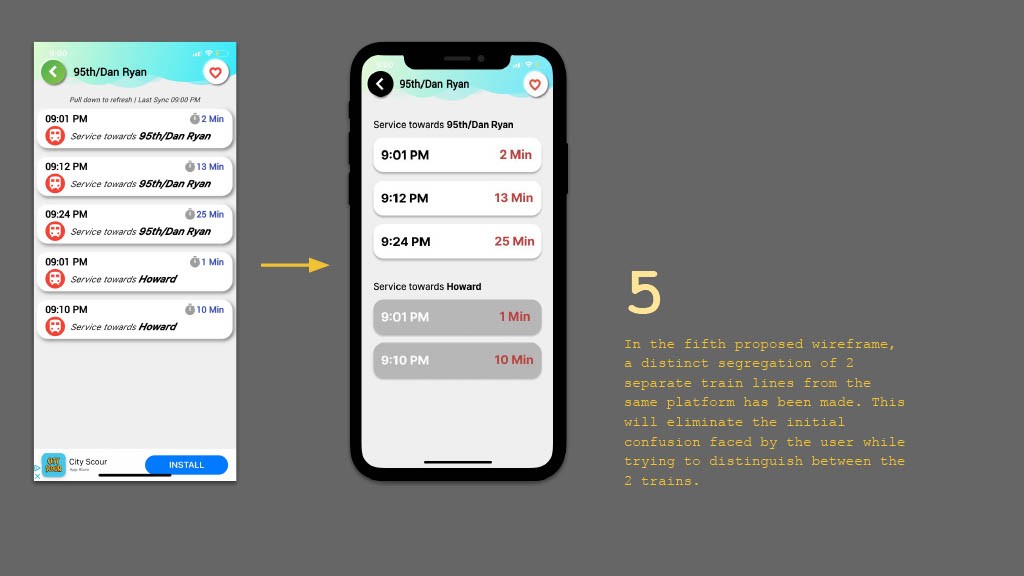
This project focuses on evaluating the Chicago Transit Authority (CTA) app to uncover usability issues and propose strategic enhancements to elevate the user experience. Through comprehensive analysis, the goal is to identify specific shortcomings of the app and provide actionable recommendations to address these issues, ensuring a seamless and efficient transit experience for Chicago’s commuters.
Approach:
Identified User Pain Points
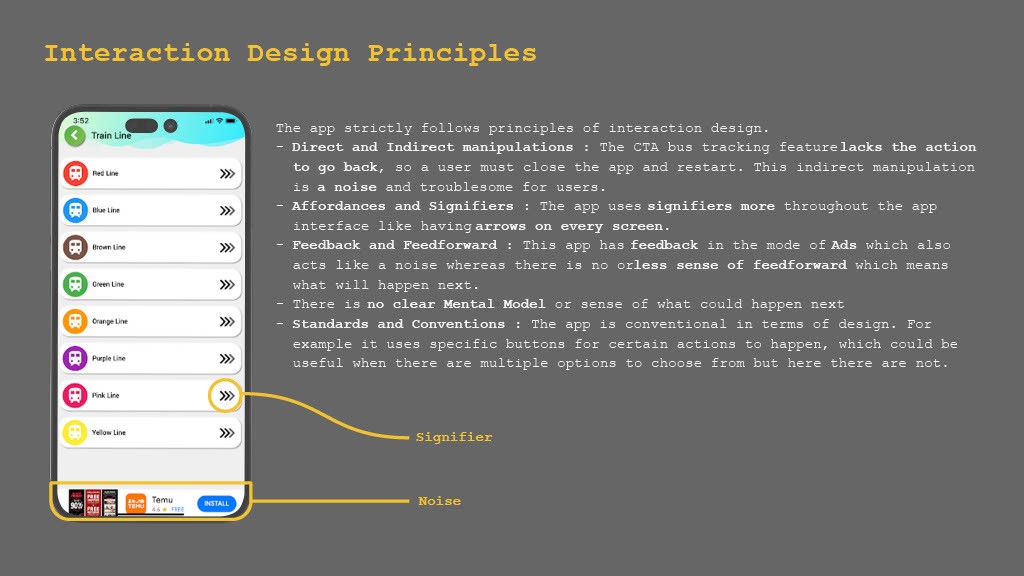
Lack of a back button causing user frustration.
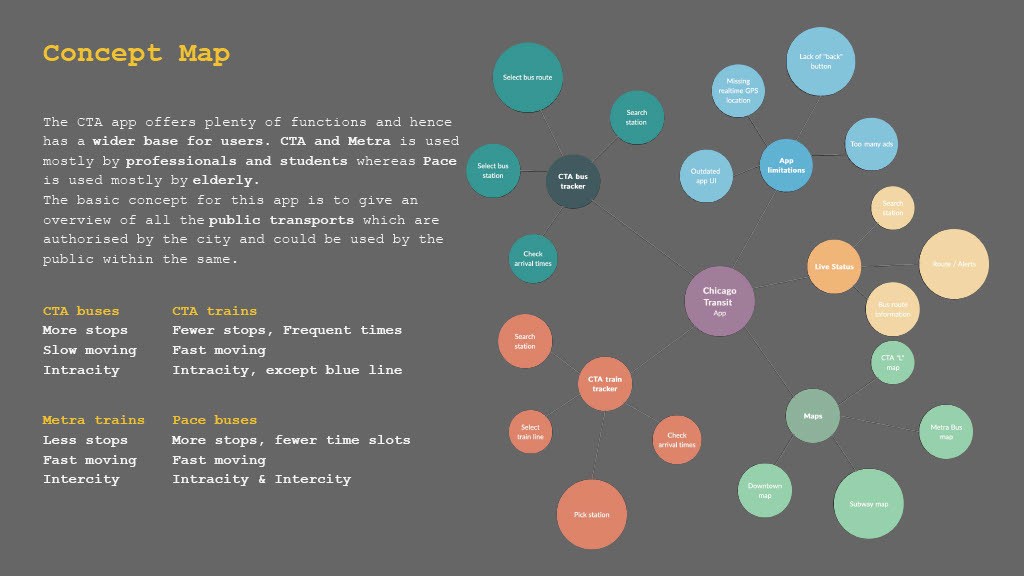
Difficulty in locating real-time GPS positions.
Cluttered user interface due to excessive advertisements.
Proposed Solutions
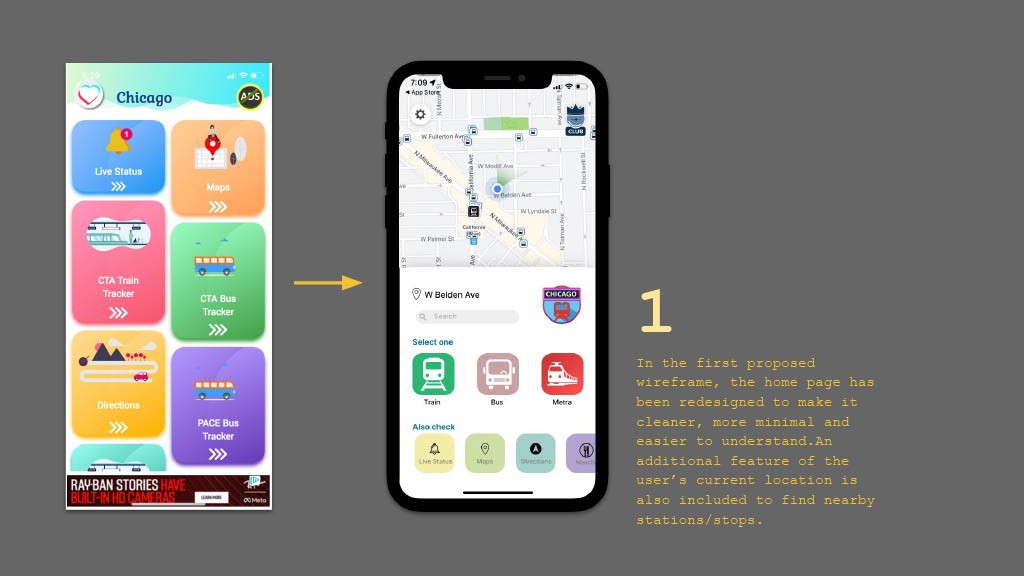
Introduced a back button for improved navigation.
Integrated a real-time location feature to enhance user convenience.
Minimized UI clutter by reducing advertisements, resulting in a cleaner interface.
Research Methods used:
Contextual Inquiry
Used to map out real-time observations of users interacting with the app.
Usability Testing
Tested prototypes with users to gather feedback on proposed changes.
Concept Mapping
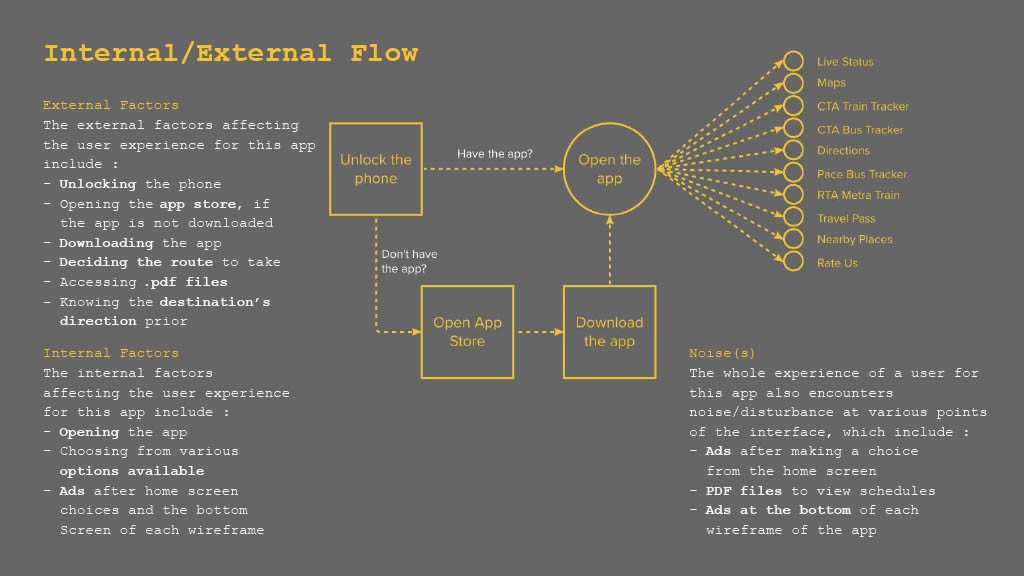
Developed visual representations to map out user interactions and flows.
User Journey Mapping
Mapped the entire commute process from planning to reaching the destination.

2022 | Innovation Mapping
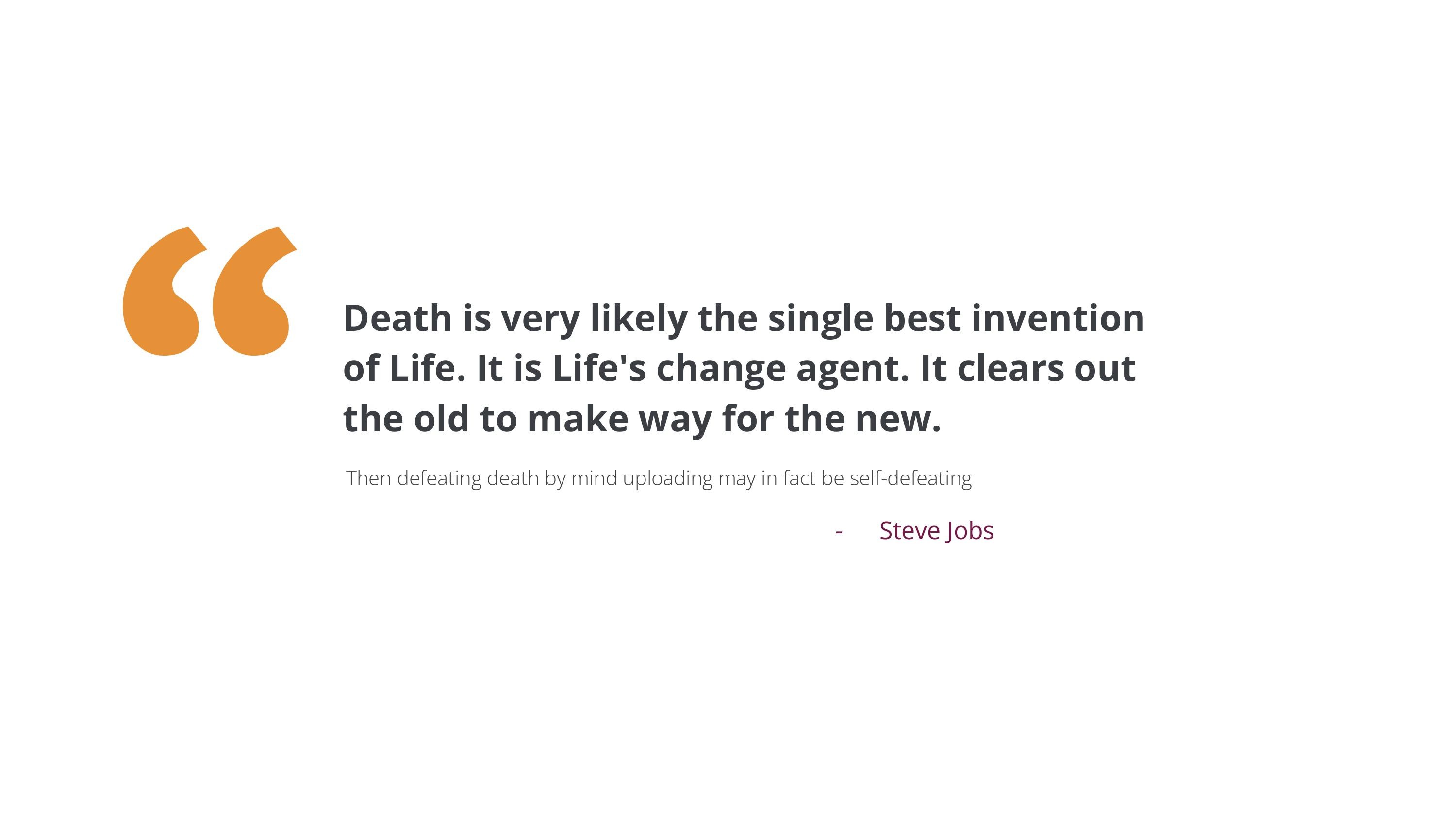
Future of Death: Exploring Technological Integration and Mortality
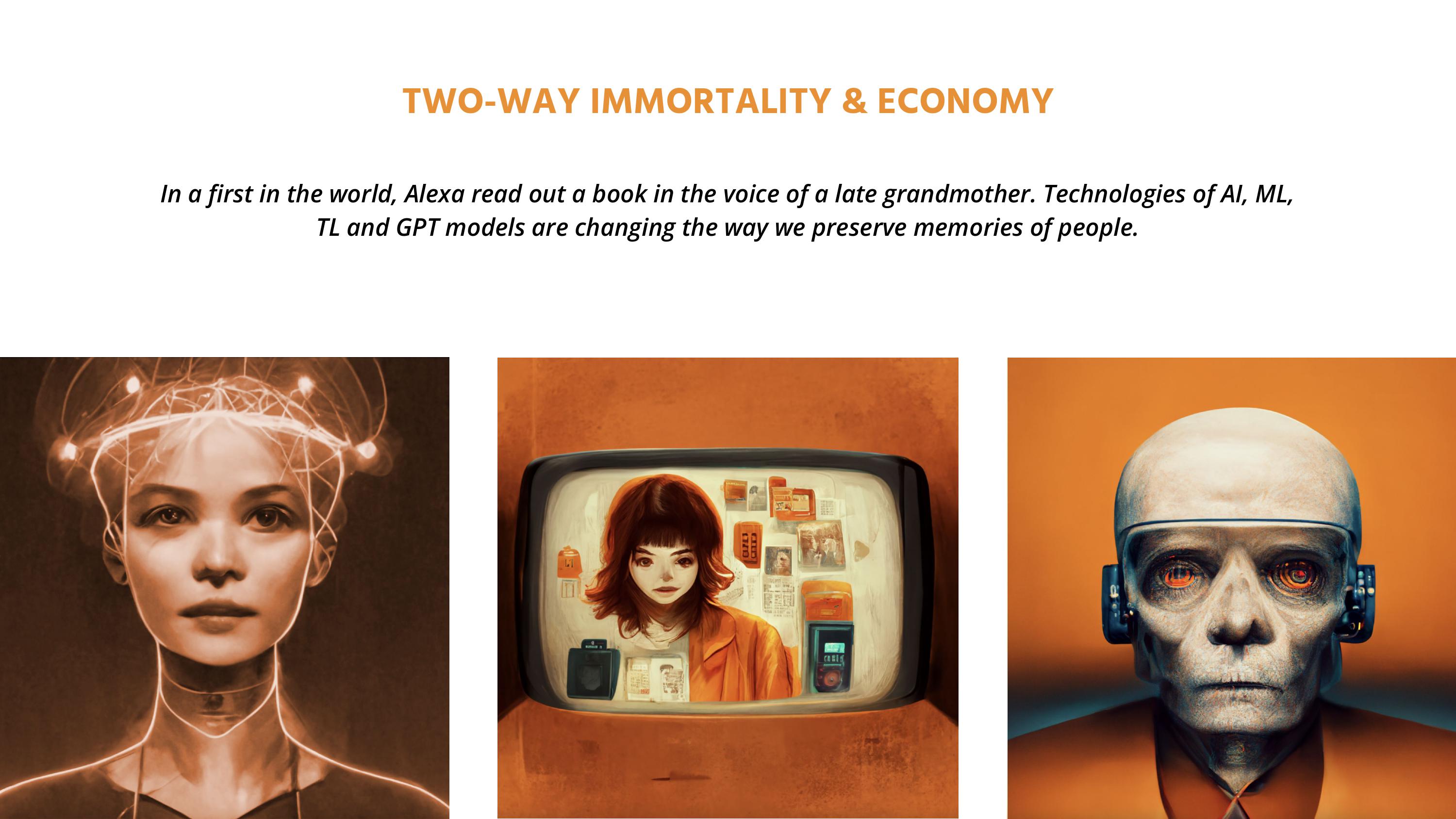
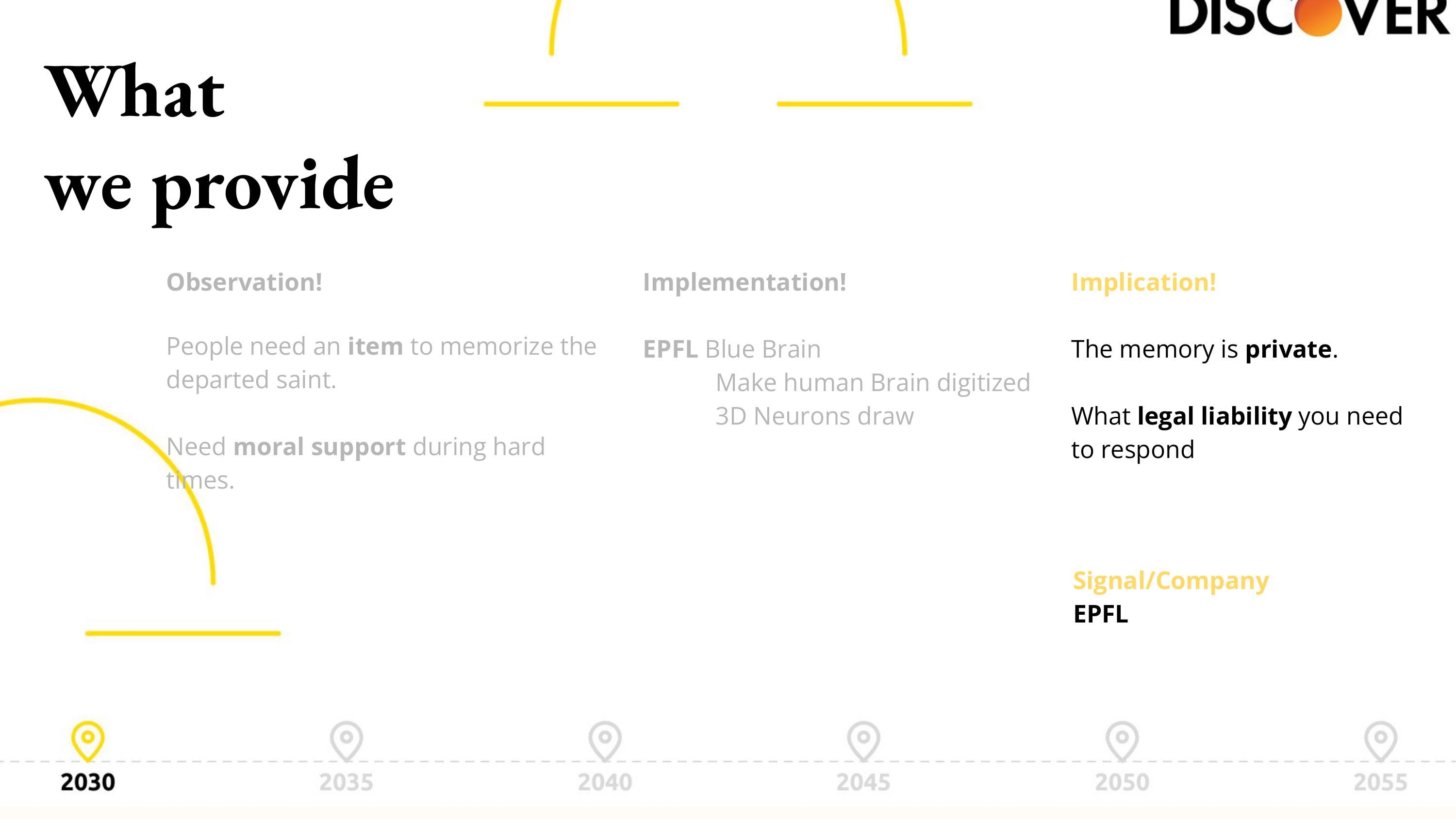
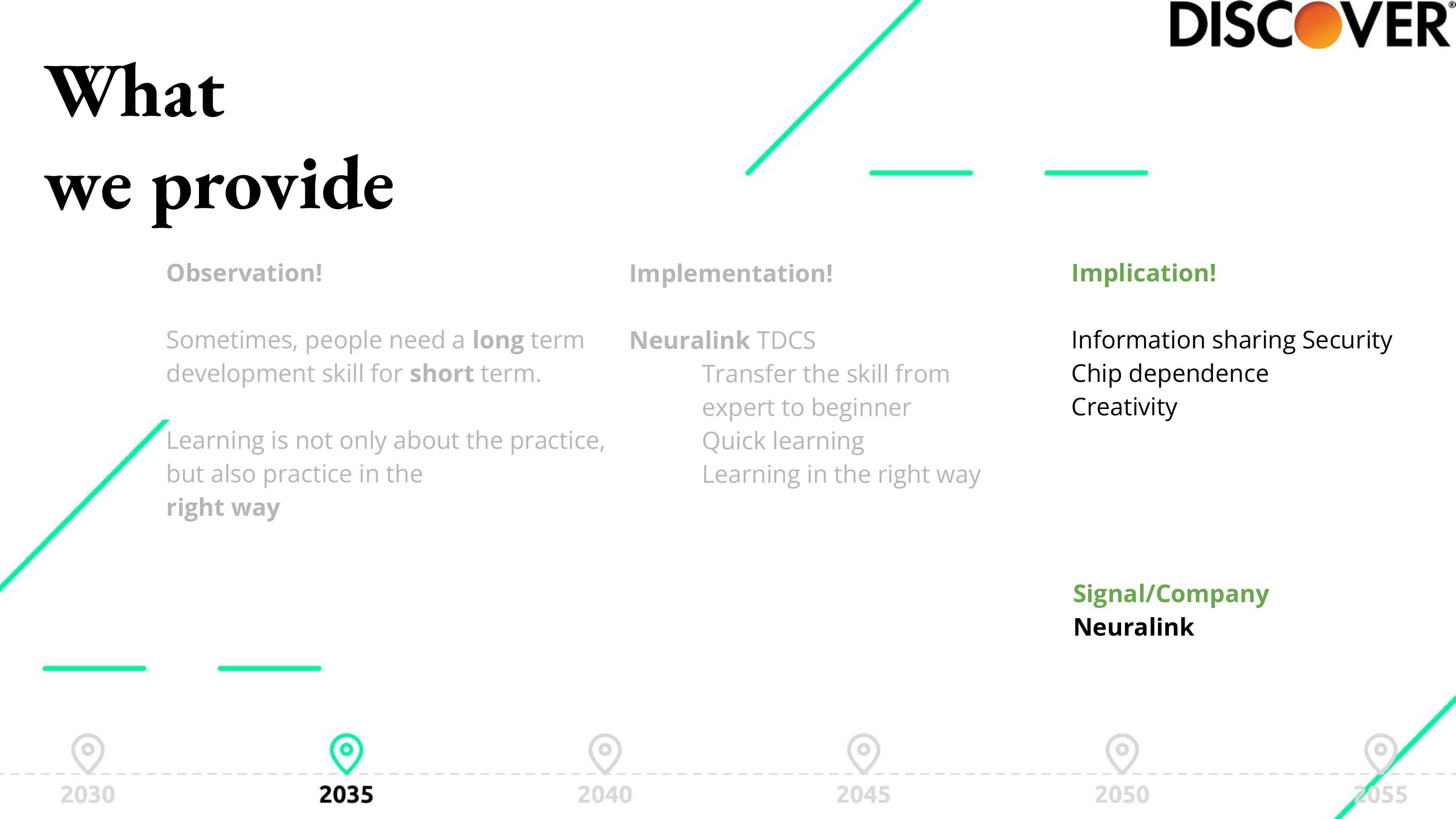
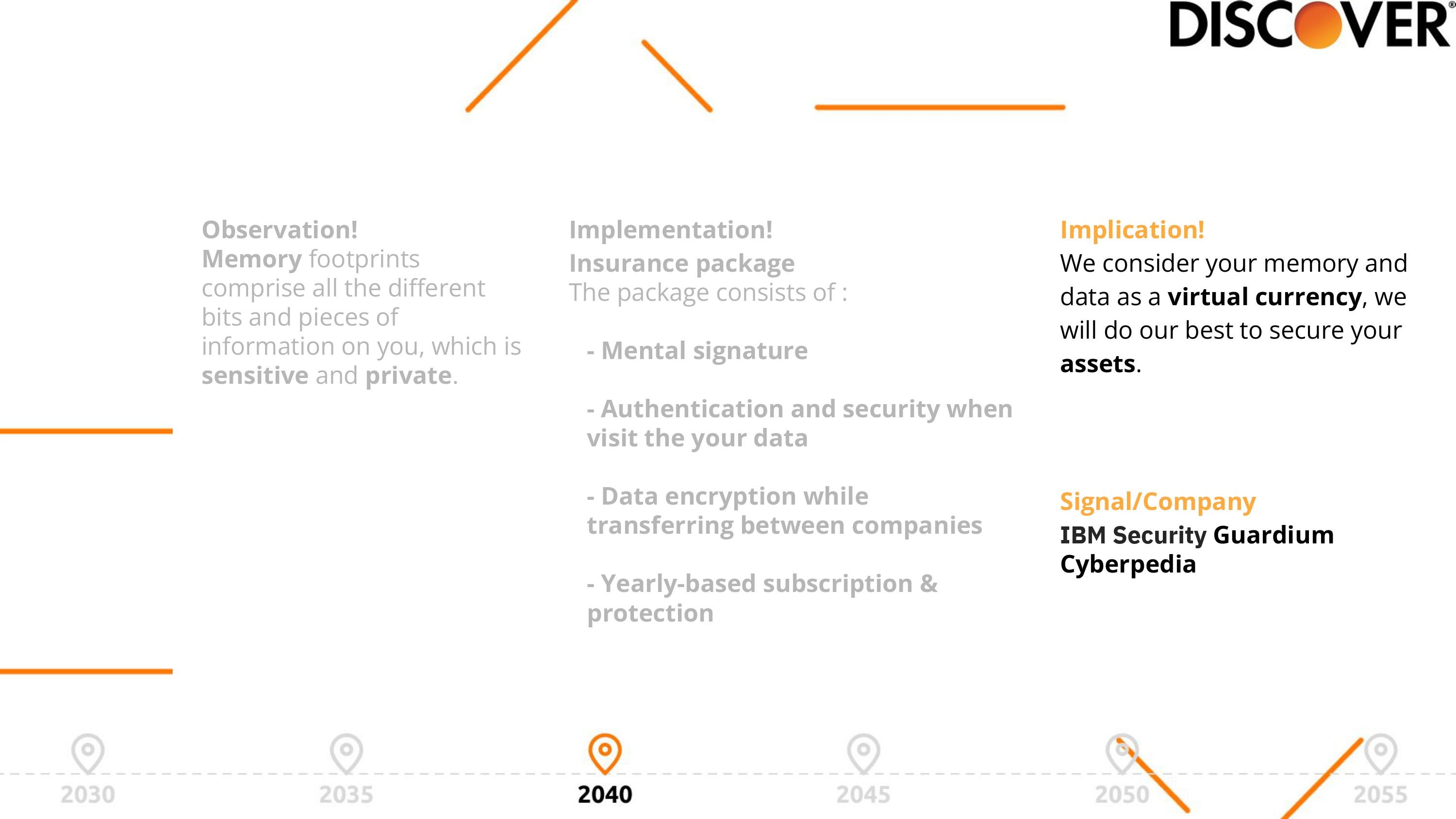
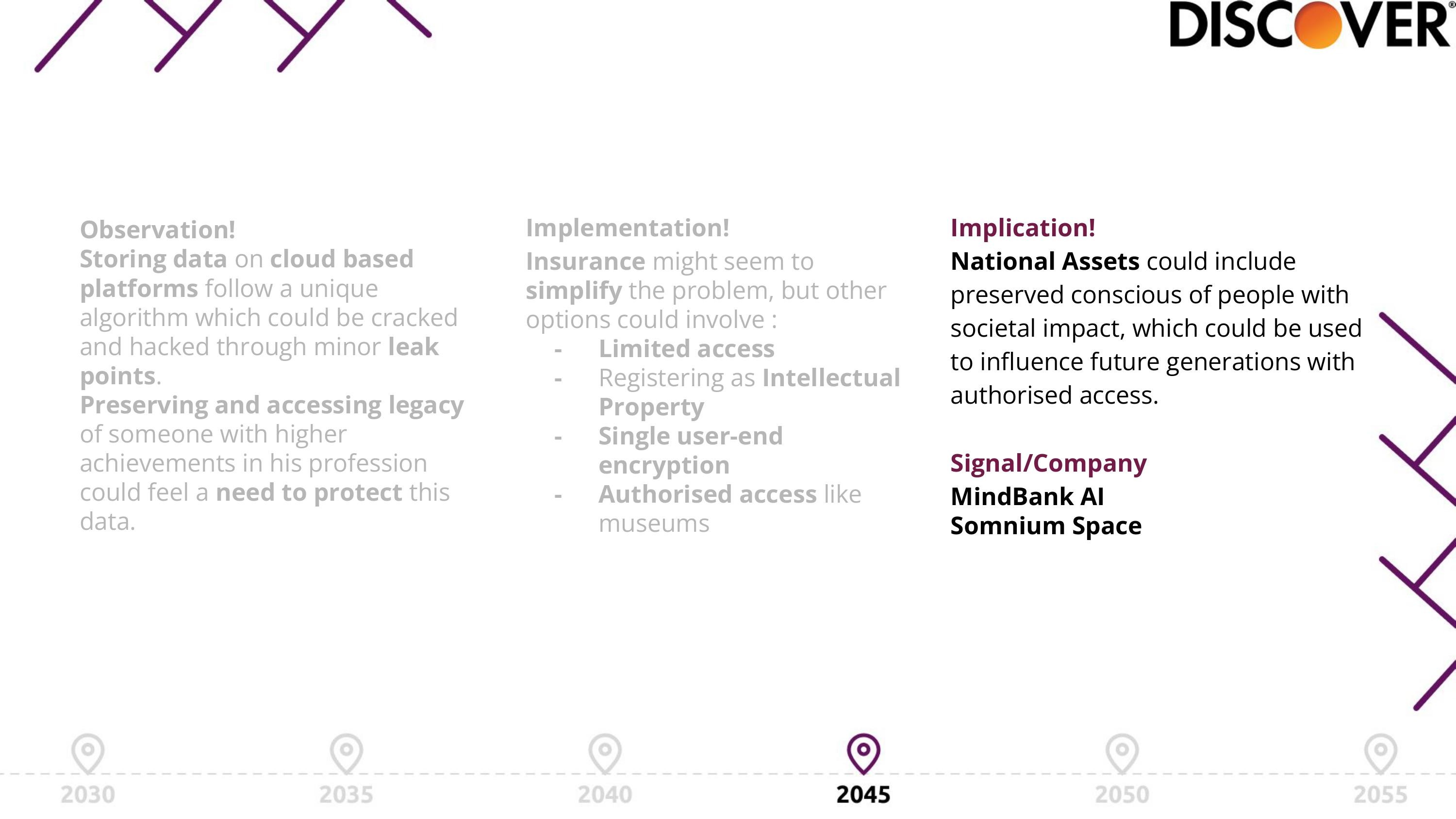
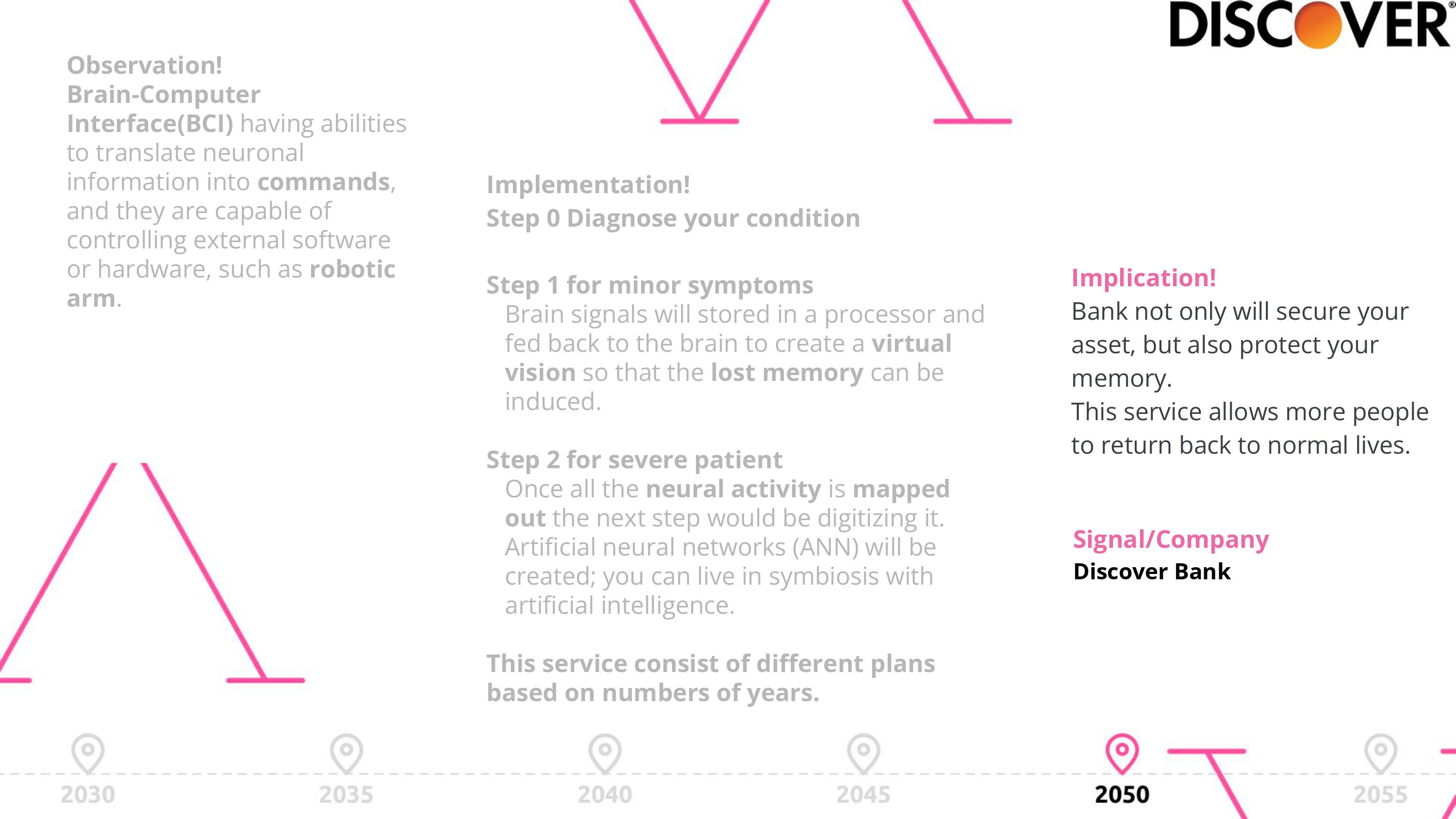
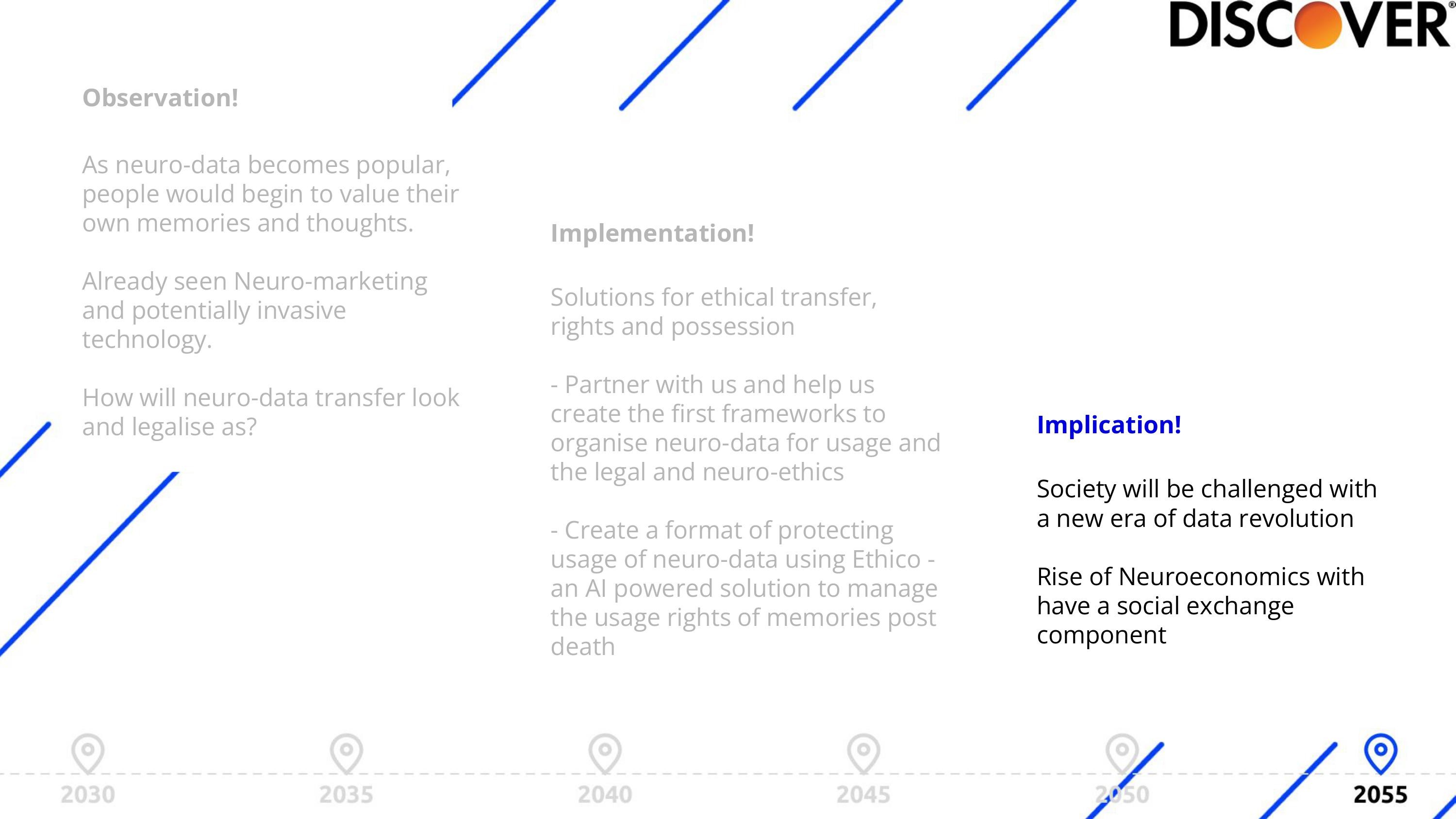
This project explores the “Future of Death” by evaluating how technological advancements might shape our understanding and management of mortality. The project focuses on envisioning future scenarios through secondary research methods such as futurecasting and backcasting, using sources like magazines, books, blogs, and journals. The aim is to provide strategic insights and propose enhancements to address potential societal challenges related to death and technology.
Approach:
Identified User Pain Points
65% of literature sources highlight concerns about preserving personal legacies post-mortem.
70% of publications indicate worries about the security of digital data after death.
60% of articles emphasize the need for enhanced emotional support during and after the loss of loved ones.
Proposed Solutions
Create digital time capsules to preserve personal and family histories.
Implement advanced security measures to protect digital legacies.
Develop AI companions to provide emotional support and continuity of memory.
Research Methods used:
Backcasting:
Analyzed historical data and trends to predict future scenarios.
Futurecasting:
Used trend analysis from sources like magazines and blogs to envision technological advancements.
Literature Review:
Reviewed magazines, books, blogs, and journals for insights on death tech trends.
Concept Mapping:
Created visual representations to illustrate potential future scenarios.
2023 | User Research
Evaluating Goodwill: Bridging User Perception and Brand Vision
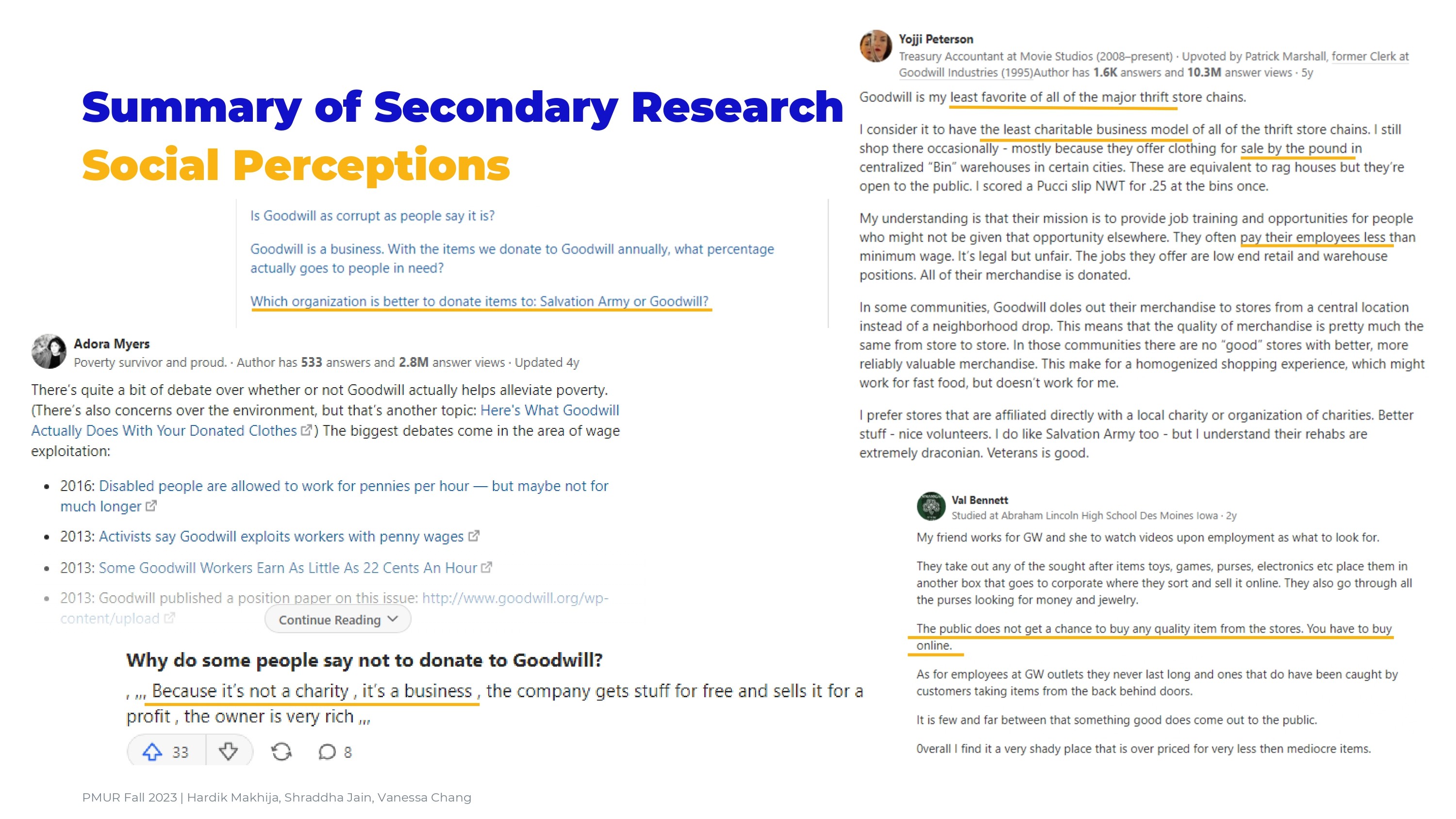
This project aims to evaluate Goodwill’s brand recognition, public perception, and mission effectiveness to increase engagement and societal impact. The goal is to identify areas for improvement in communication and operations to better align with user expectations and enhance brand perception.
Approach:
Identified User Pain Points
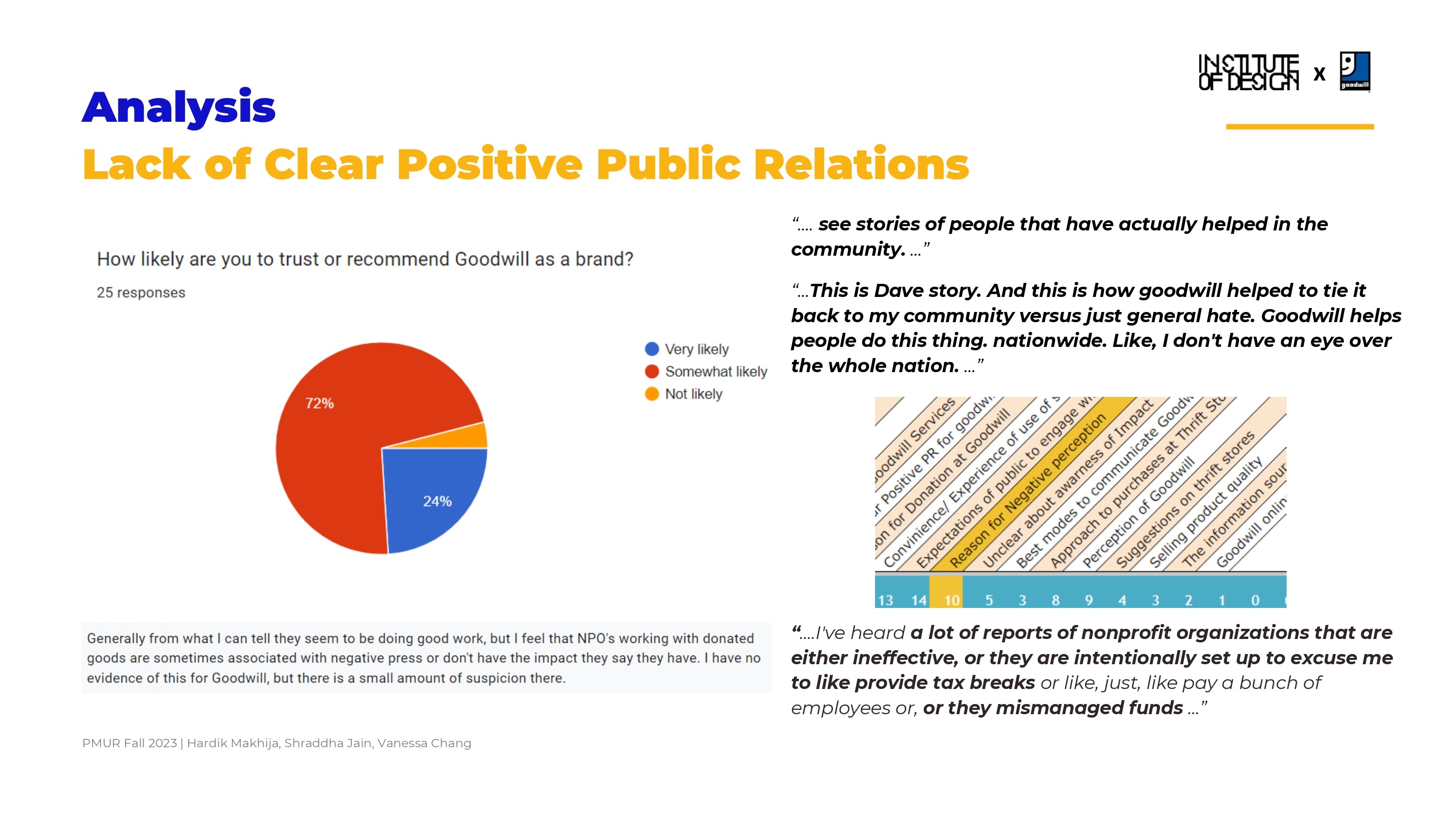
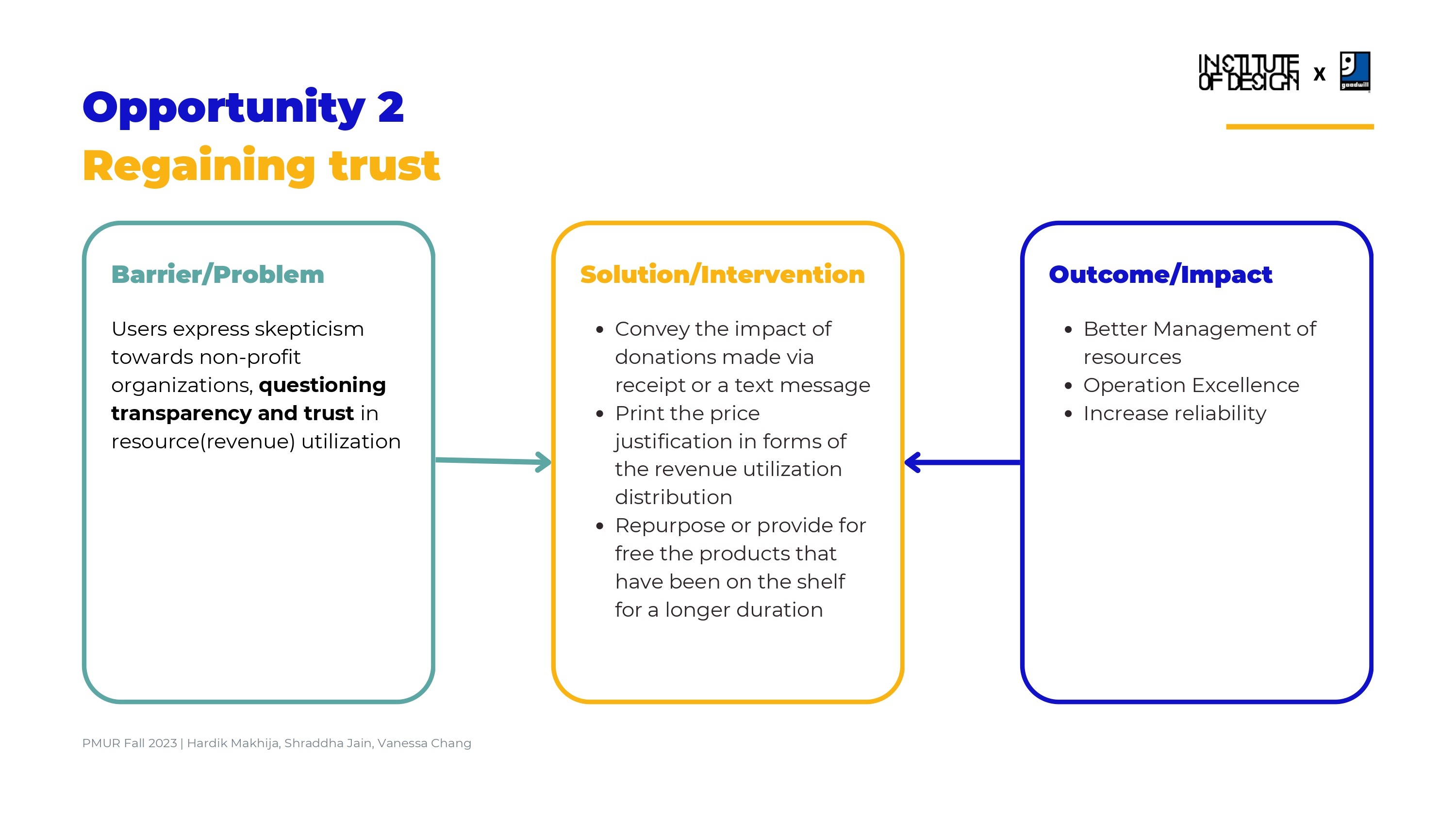
72% of users felt Goodwill’s public relations were insufficient.
65% of users were unaware of Goodwill’s community services.
60% of users viewed Goodwill primarily as a thrift store.
Proposed Solutions
Enhance communication strategies to raise awareness about Goodwill’s societal impact.
Implement transparent and engaging methods to convey the impact of donations and revenue utilization.
Strengthen branding and advertising efforts to highlight Goodwill’s community services and values.
Research Methods used:
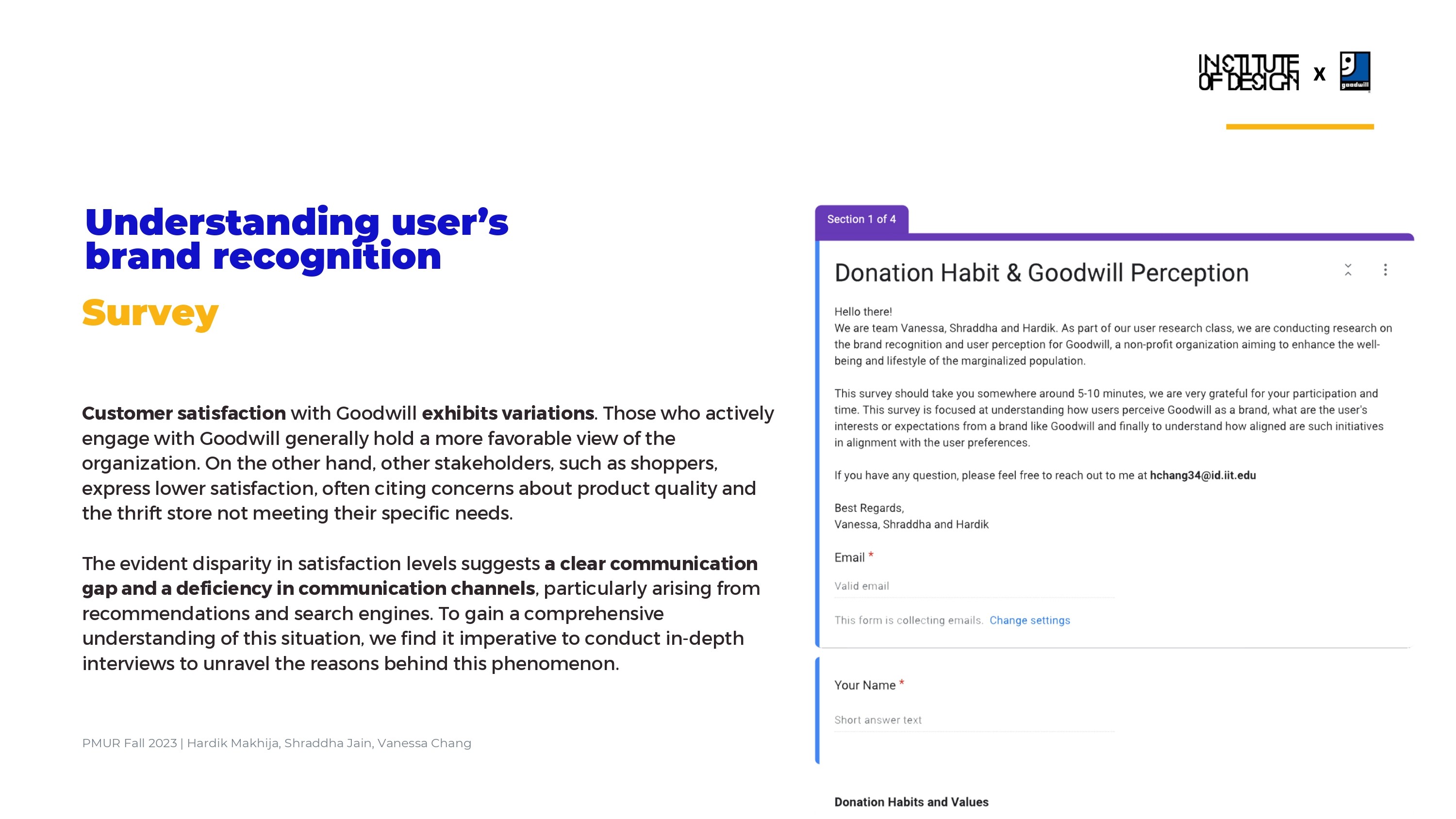
User Surveys:
64% of 55 participants lacked awareness of community services.
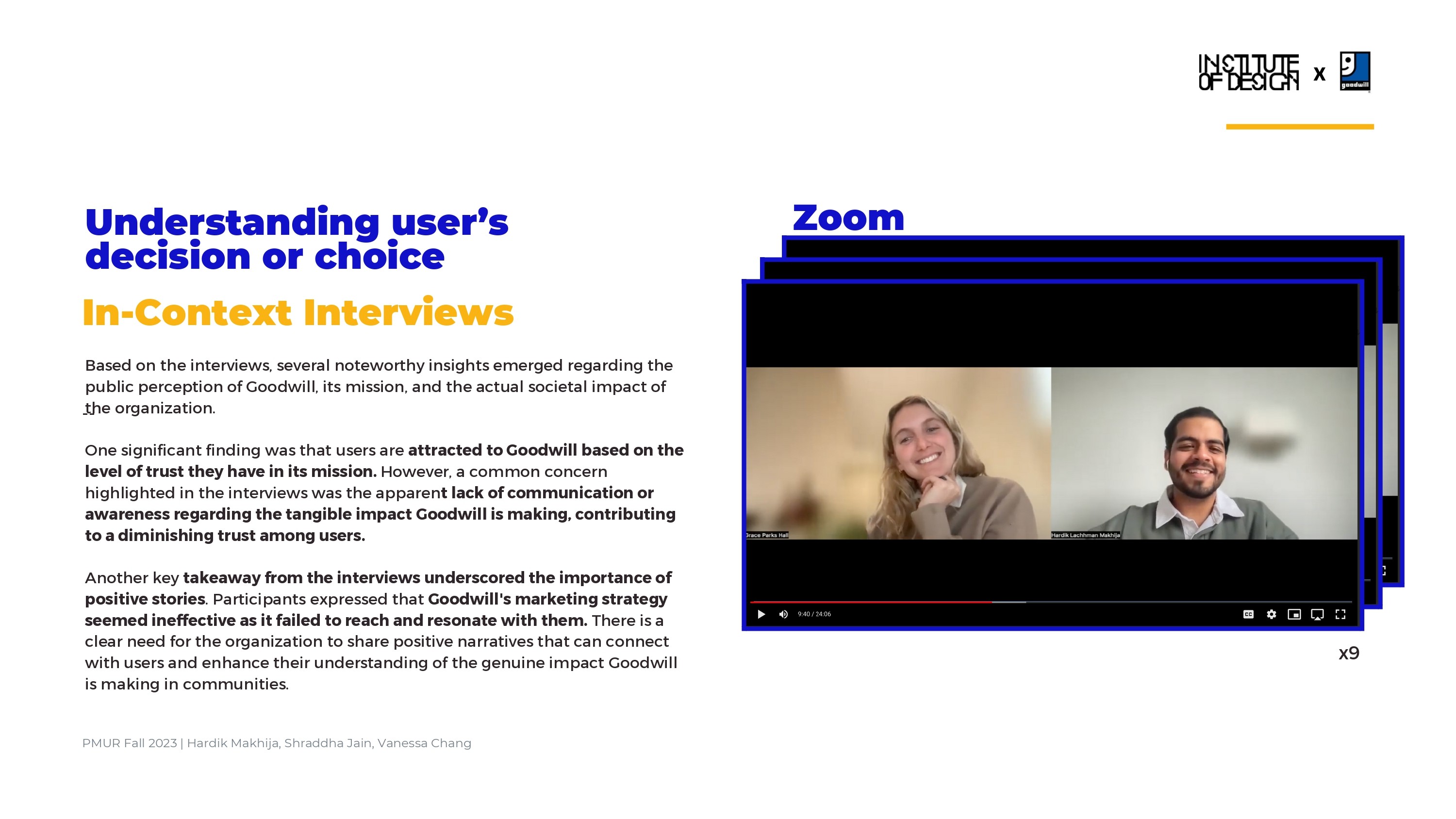
In-Context Interviews:
68% of 30 users trusted the brand but were unaware of its broader impact.
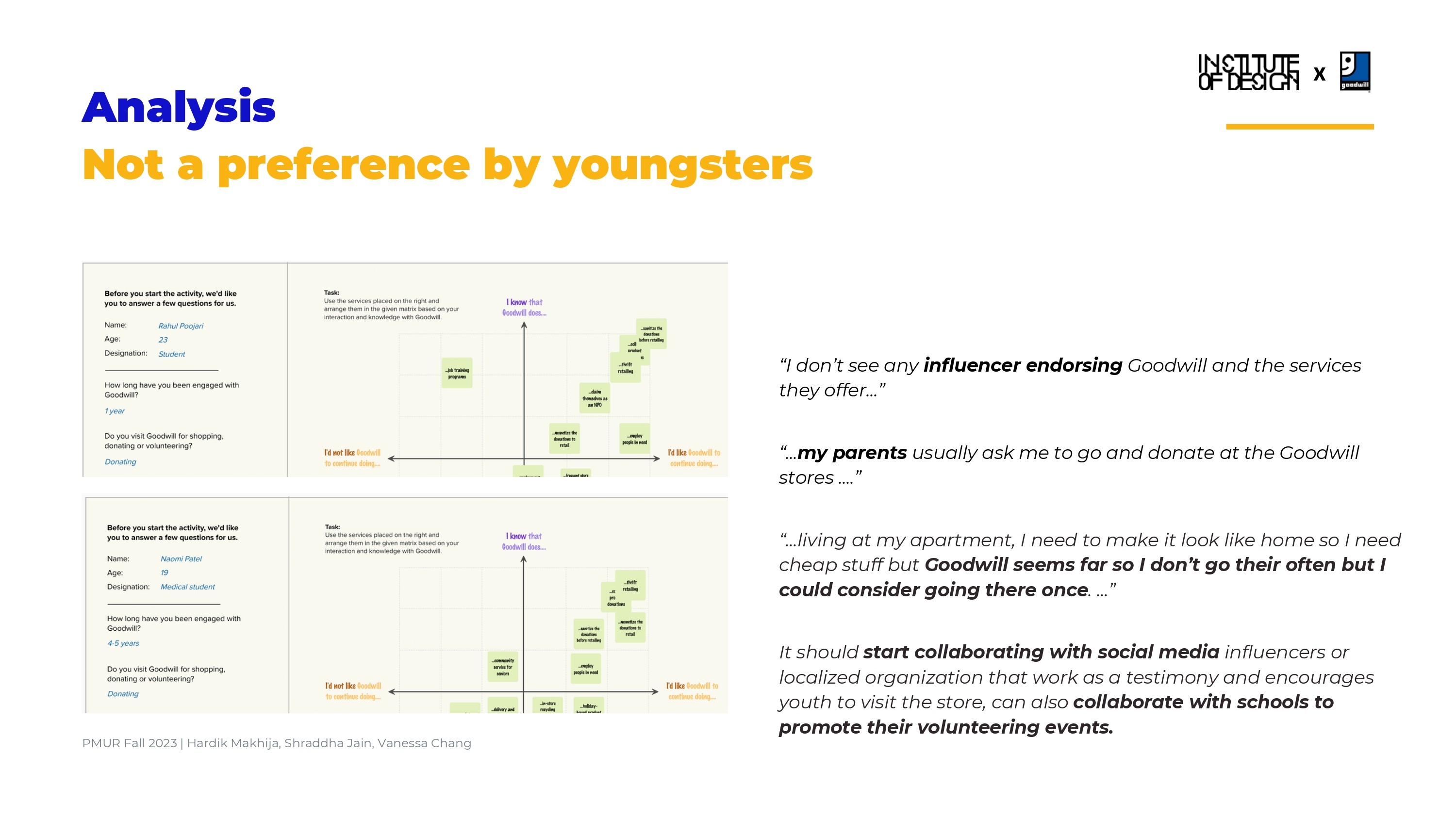
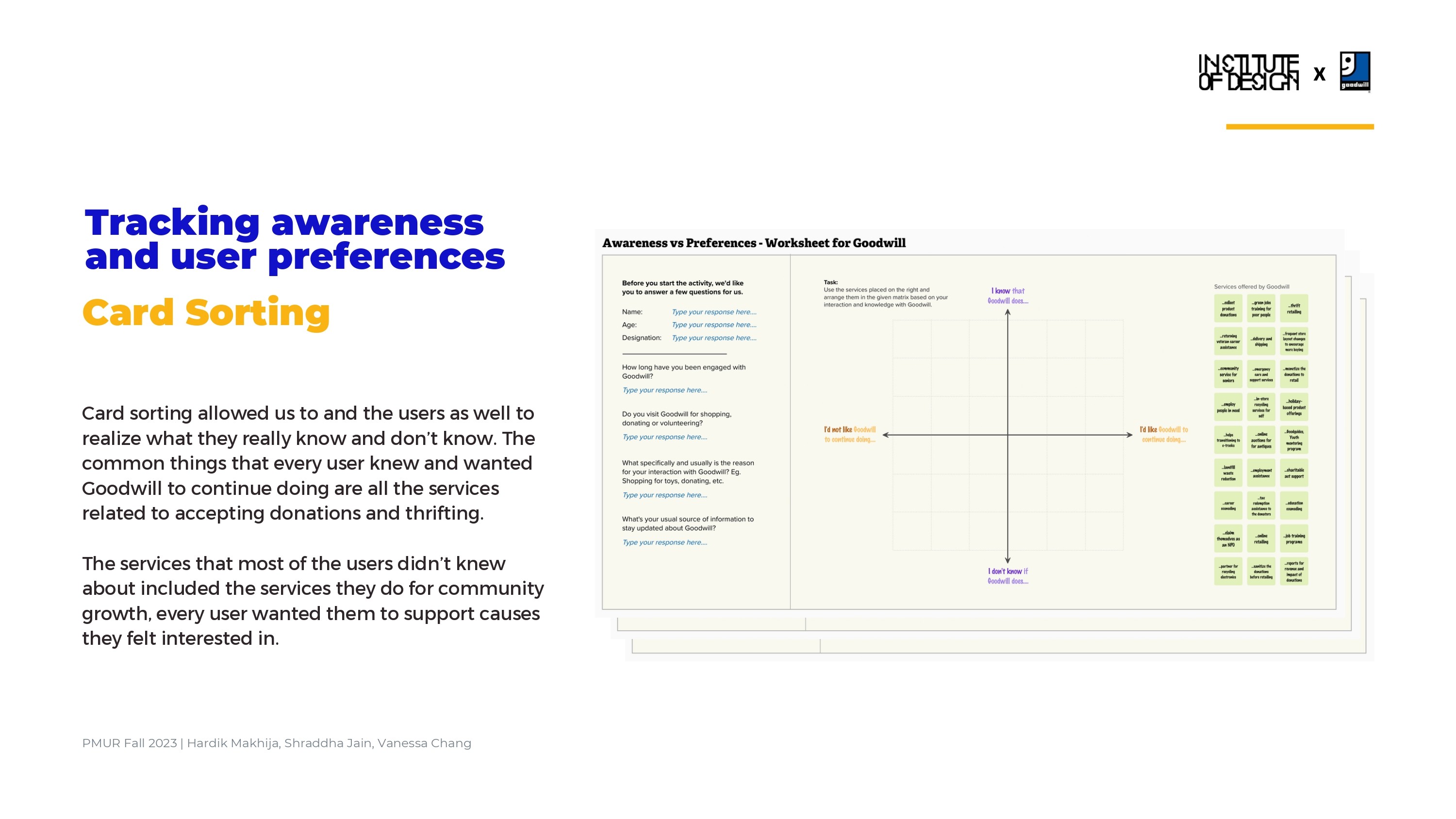
Card Sorting:
60% of 30 participants had gaps in understanding Goodwill’s services.
Contextual Inquiry:
70% of users were unaware of key services.
2023 | Systems Mapping
Systems Mapping to Identify Insulin Price Hikes in the USA
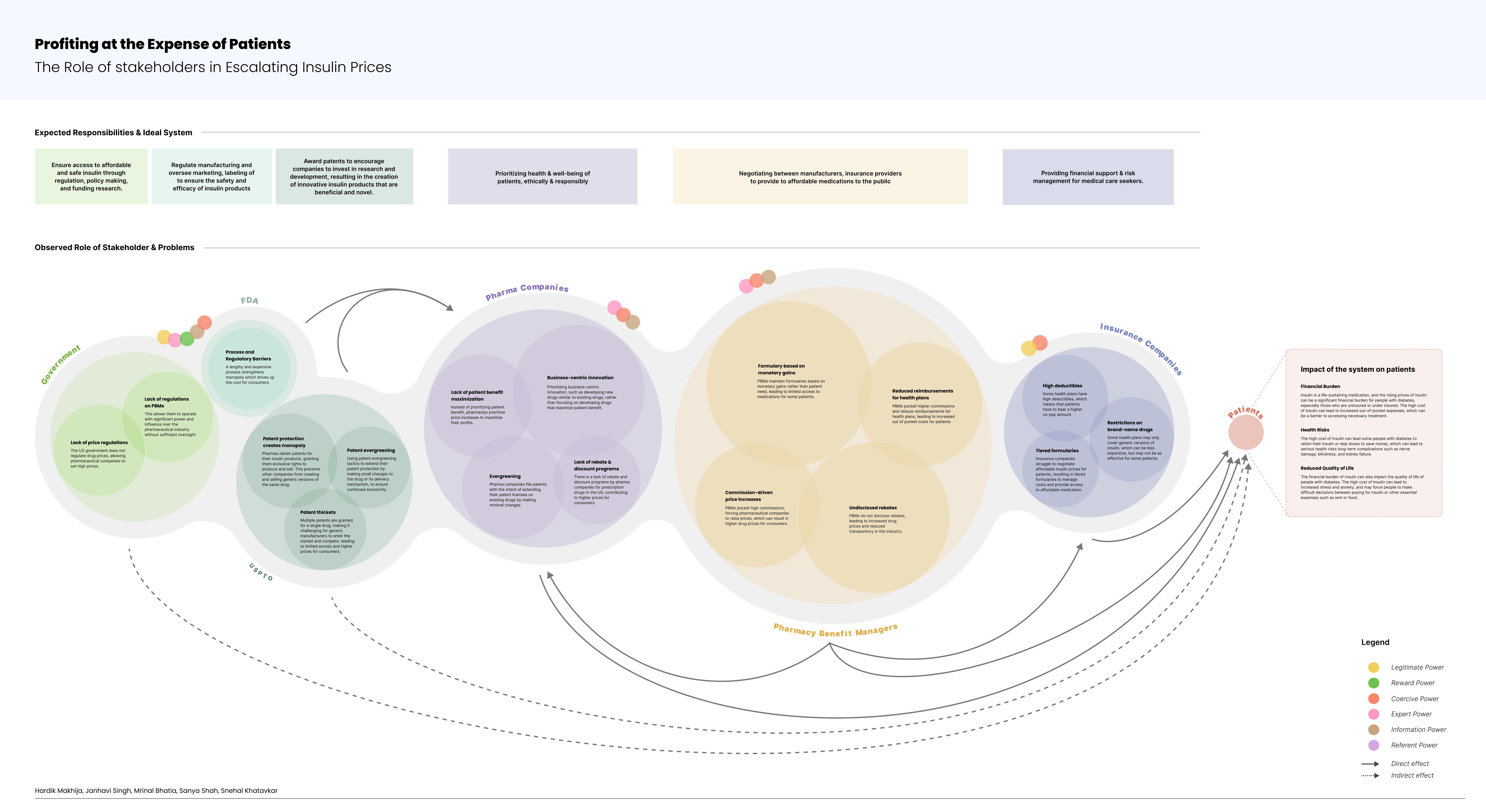
This project aims to identify the reasons behind the high insulin prices in the USA using systems mapping to pinpoint critical hot spots within the pharmaceutical supply chain. The project seeks to provide actionable insights for strategic interventions that can help reduce insulin costs and improve accessibility for patients.
Approach:
Identified User Pain Points
Identified inefficiencies and markups at various stages.
Highlighted opaque pricing mechanisms and negotiations.
Pinpointed the impact of patent protections and regulatory barriers.
Found significant market control by a few key players.
Proposed Solutions
Implement strategies to streamline the supply chain and reduce costs.
Advocate for policies that require clear pricing disclosures.
Propose changes to patent laws and regulatory processes to encourage competition.
Support initiatives that increase market competition and reduce monopolistic practices.
Research Methods used:
Systems Mapping
Visualized the pharmaceutical supply chain to identify key relationships and dependencies.

Causal Loop Diagrams
Developed diagrams to understand feedback loops and their effects on insulin pricing.
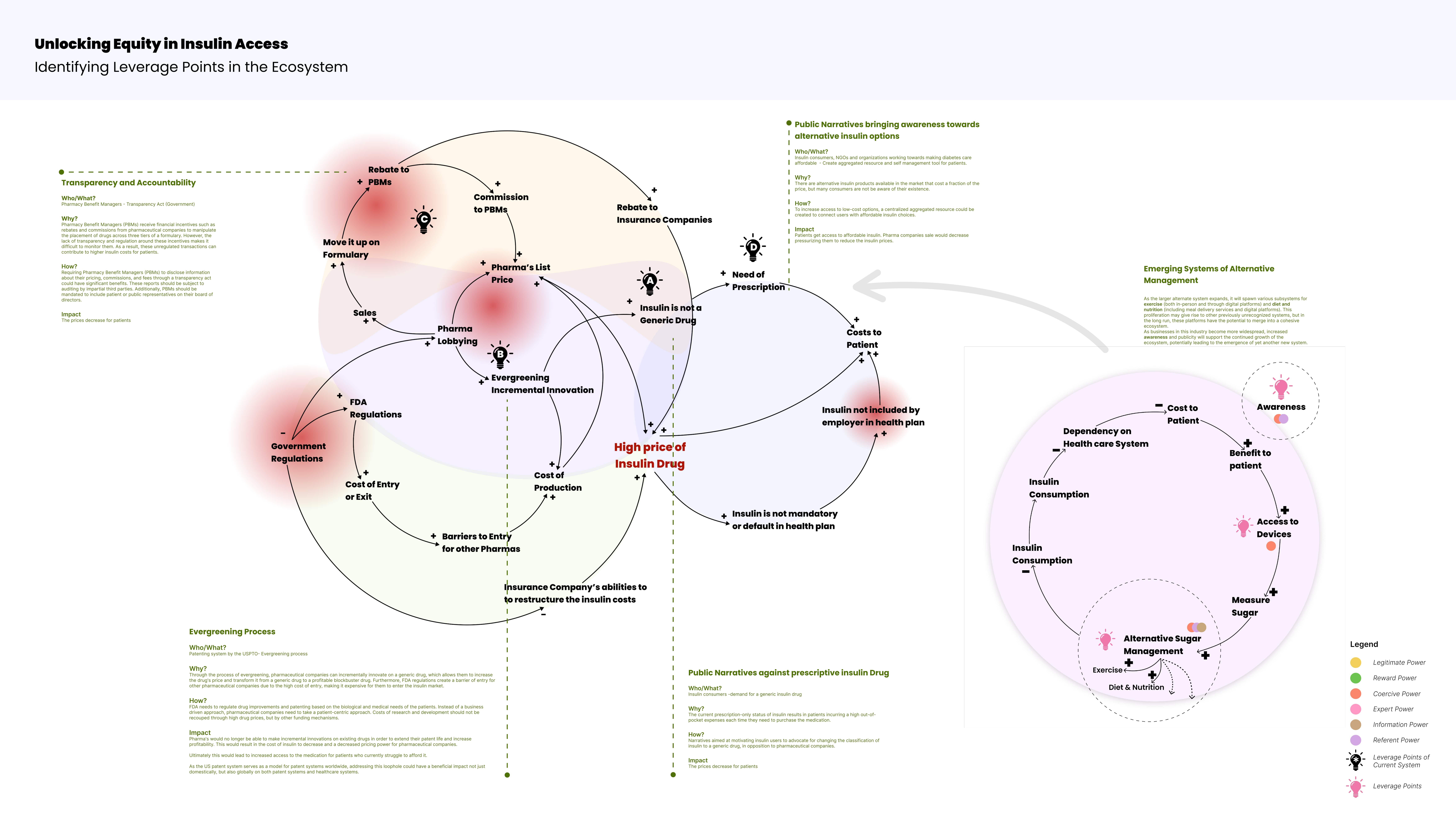
Leverage Mapping
Identified leverage points within the system where strategic interventions could have the most impact.
Stakeholder Mapping
Identified and analyzed the roles and influences of various stakeholders within the system.
Thanks for viewing.
Hope you enjoyed it!